Understanding Hunterdon County Farmland Rollback Tax
August 13, 2026
August 13, 2026
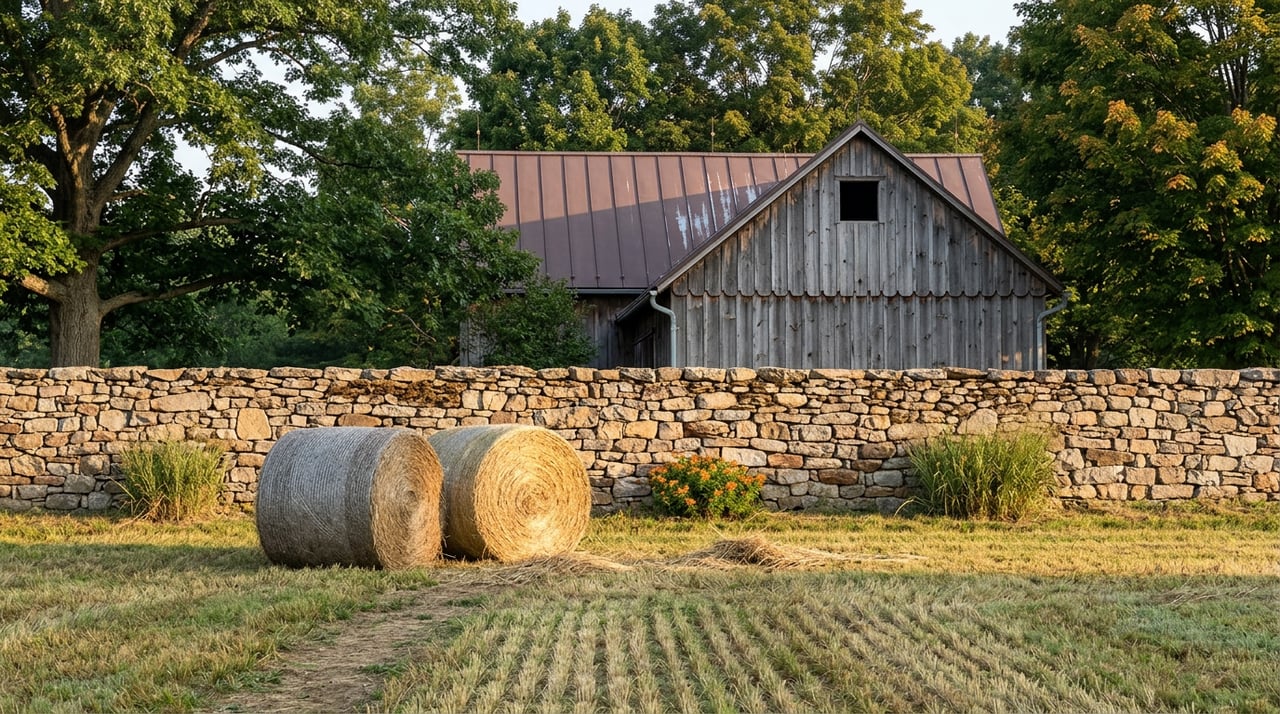
A buyer walks a 14-acre property outside Ringoes. The house is right, the barn is usable, and the tax bill on the listing sheet reads something like $3,200 a year, a fraction of what a similar-sized parcel down the road pays. Six months after closing, the new owner clears the back pasture for a pool and a horse paddock they never plan to use for hay, and a notice arrives from the township assessor. The amount may differ from the $3,200 they budgeted for.
The NJ Division of Taxation says farmland assessment can lower a property's tax bill while it remains in qualifying agricultural or horticultural use. If the use changes, rollback taxes may apply.
New Jersey's Farmland Assessment Act lets qualifying land be taxed on its agricultural productivity value instead of its market value. To qualify, a property needs at least five contiguous acres actively devoted to agricultural or horticultural use, not counting the house and yard, and the land has to generate a minimum of $1,000 in gross sales per year for the first five acres, plus $5 for each additional acre. Filing happens annually with the municipal tax assessor, due by August 1 of the year before the tax year in question.
The financial effect of qualifying is large. According to NJ Tax Calculator, landowners with the required acreage can reduce their municipal property tax obligation by 90 percent or more, because the assessor is valuing the land as farmland rather than as a buildable homesite. On a 20-acre parcel in a high-tax township, that can mean the difference between a $25,000 annual bill under standard assessment and something closer to $1,500 under farmland assessment.
| Standard market assessment | Farmland assessment | |
|---|---|---|
| Basis of value | Highest and best use, comparable sales | Agricultural productivity value |
| Annual tax on a 20-acre example parcel | Roughly $25,000 | Roughly $1,500 |
| Who determines eligibility | N/A | Municipal tax assessor, using values the State Farmland Evaluation Committee sets annually |
The listed amount reflects the property's current assessment and use. It may change if you alter that use, and the listing does not establish whether annual filing and income requirements have been met.
If farmland-assessed land is converted to a non-agricultural use, the town does not just move the parcel to standard assessment going forward. It calculates a rollback tax: the difference between what was paid under farmland assessment and what would have been paid under standard assessment, applied to the year the change happens plus the two tax years immediately before it, according to the NJ Division of Taxation.
Run that math on the 20-acre example above. A gap of roughly $23,500 a year, applied across three tax years, produces a rollback bill north of $70,000. That potential cost is worth accounting for before you make an offer.
Here is where the picture gets less alarming, and more useful. Rollback taxes are not triggered just because a town suspects a property might no longer qualify. They require a demonstrated change in use.
That distinction was tested close to home. In Flemington Trade Center v. Township of Raritan, a New Jersey Tax Court case, the court found that rollback taxes could not be imposed without clear evidence that the property's use had actually changed, even where there were open questions about the parcel's continued eligibility for farmland assessment, according to a summary from Mrod Law. Raritan Township sits directly next to Flemington, so this is not an out-of-state precedent.
For a buyer, that means the risk is narrower than the worst-case number suggests. Letting the paperwork lapse on a technicality is not automatically the same as triggering a rollback. What actually matters is whether the agricultural use itself stops: whether the hay stops getting cut, the horses leave and nothing replaces them, or the pasture becomes a lawn.
This is not a static set of rules. In January 2026, Governor Phil Murphy signed the Farmland and Woodland Tax Assessment Integrity and Investment Act (S3446/A6278) into law, according to New Jersey Business Magazine. The law raises penalties for misrepresentation on farmland assessment applications, requires more frequent review of the income thresholds that determine eligibility, and adds new members, including the State Forester, to the committee that sets those thresholds.
At the same time, the paper-based FA-1 filing process is being replaced by an online portal, built in partnership with the Department of Environmental Protection and Department of Agriculture, according to the Governor's Office. The portal is intended to take effect for Tax Year 2027 assessments, and it is designed to make it easier for the state and municipalities to audit which parcels are actually meeting the requirements rather than simply renewing a decades-old filing.
For a buyer, the direction of travel matters more than any single provision. Enforcement is becoming more organized, and properties may receive closer review going forward.
The instinct to treat a low tax bill as a red flag, or to treat farmland assessment as free money with no strings, are both wrong in the same direction. The exemption is real, the savings are real, and the risk is specific rather than automatic. It attaches to a change in use, not to ownership itself, and Hunterdon's own case law backs that up.
The practical move is to treat the current tax bill as one data point, not the whole picture, before you make an offer on any parcel carrying farmland assessment. Ask for the filing history. Understand what activity is actually keeping the assessment in place. Decide, before you close, whether you are continuing that activity or ending it, and price the second option accordingly.
Does a new owner automatically lose farmland assessment status at closing? No. Farmland assessment continuing is tied to the land staying in qualifying agricultural or horticultural use, according to the NJ Division of Taxation. A change in ownership by itself does not trigger a rollback if the new owner keeps the land in a qualifying use.
If I want to keep the tax benefit, what should I check? Ask whether the property's agricultural or horticultural use and income meet the program's requirements.
Can I negotiate who pays a rollback tax if I plan to develop part of the land? That is worth addressing in the purchase agreement and discussing with your attorney during attorney review rather than assuming either side will pay.
Acreage in Hunterdon County comes with more moving parts than a standard suburban listing, and the tax bill is often the piece that gets the least attention until it changes. If you are weighing a farm, a farmette, or any parcel carrying an assessment you don't fully understand yet, Beverly Yoson has spent years walking Hunterdon buyers through exactly this kind of property. Let's Connect before you write the offer, not after.
This article is general information, not legal, tax or financial advice. Consult a qualified professional about your situation.
Stay up to date on the latest real estate trends.

Experience a real estate partnership built on trust, expertise, and genuine care. Beverly brings a lifelong understanding of what “home” truly means to every client and every decision.