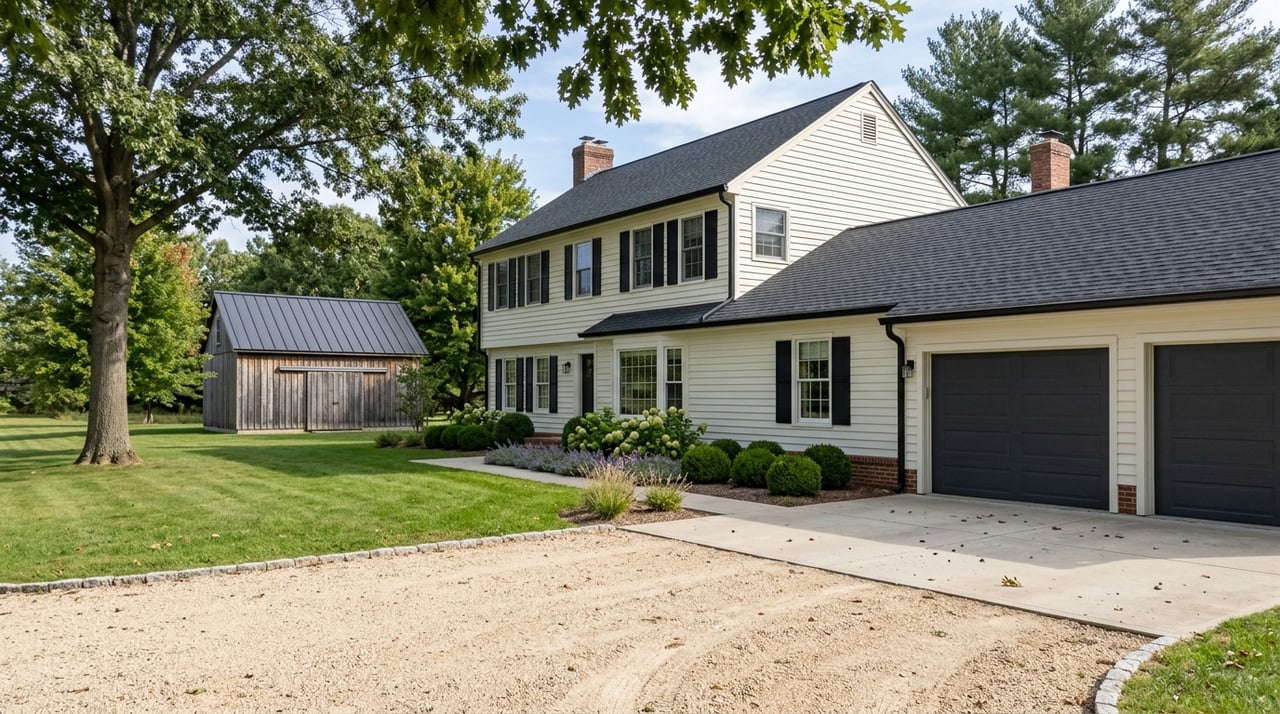
Buying Land in Hunterdon County: What to Know First
May 21, 2026
May 21, 2026
Dreaming about a home with a few acres in Hunterdon County? It is easy to picture the privacy, open views, and extra space, but land can change the buying process in ways many buyers do not expect. If you want to buy with confidence, you need to look beyond the house and understand how the land itself is classified, accessed, and serviced. Let’s dive in.
Hunterdon County is not just a place with bigger lots. It is a county shaped by agriculture, preservation, and rural land use. According to county and USDA data in the research report, Hunterdon had more than 120,000 farmland-assessed acres as of 2017, and the 2022 Census counted 1,623 farms and 91,588 acres in farms.
That matters because buying land here often means buying into a property with a specific legal and practical context. A home on acreage in Hunterdon County may look similar to another listing at first glance, but the land behind it can come with very different rules, tax treatment, and long-term uses.
Before you fall in love with a property, it helps to understand which type of land you are actually buying. In Hunterdon County, acreage properties often fall into one of four broad situations.
This is the most straightforward setup for many buyers. It is typically a standard residential property with a larger lot, but without the special tax treatment or development restrictions tied to agricultural programs.
Even so, you still need to confirm local details like access, septic, well history, drainage, and any easements shown in county records. A large lot does not automatically mean total flexibility.
Farmland assessment is a tax program, not the same as preserved farmland. In New Jersey, land generally must include at least 5 contiguous acres devoted to agricultural or horticultural use for two consecutive years, meet minimum gross-sales thresholds, and have an application filed with the assessor by August 1 of the pretax year.
This distinction matters because buyers sometimes assume lower taxes will continue automatically. If the land use changes from farm to non-farm, rollback taxes can be assessed for the change year and the two prior years.
Preserved farmland remains private property, but the development rights are restricted. Those restrictions run with the land, which means they stay in place for future owners too.
If you are buying a preserved farm, you should be very clear about what improvements, additions, or alternate uses may be limited. This can be a great fit for some buyers, but only if your plans match the property’s restrictions.
An agricultural development area, or ADA, is land identified by the county where agriculture is preferred, though not necessarily exclusive. ADA inclusion can affect preservation eligibility and some cost-share benefits.
For a buyer, the key point is that an ADA is part of a broader agricultural framework. It does not mean the property is automatically preserved, but it does signal that farming is an important land use in the area.
If you are buying near active farms, you should know about New Jersey’s Right to Farm protections. Qualifying commercial farms may receive nuisance protections while continuing normal agricultural operations.
The research report notes that eligibility generally requires more than five acres and at least $2,500 in annual agricultural production, among other requirements. So if you are expecting a peaceful rural setting, remember that nearby agricultural activity may continue as part of normal farm operations.
This does not mean rural living is a bad choice. It simply means your idea of privacy should include an honest look at what is happening on neighboring land now and what may continue in the future.
With acreage, paperwork is just as important as the home tour. Hunterdon County records deeds, maps, mortgages, releases, and other land documents through the County Clerk, and the county GIS division maintains parcel and easement datasets along with a public parcel viewer.
These records can help confirm:
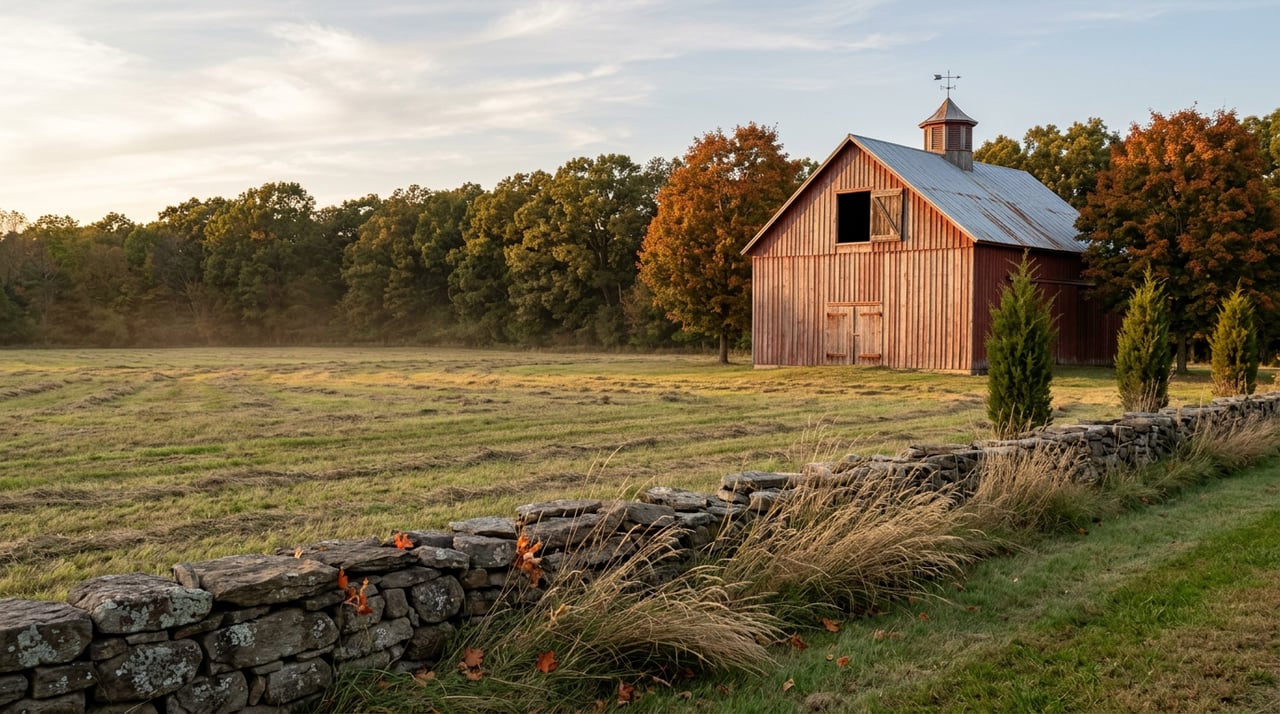
If you are looking at a property with woods, fields, a barn, or a long private drive, this step is especially important. What appears simple on-site can be much more complicated on paper.
One of the most overlooked parts of buying a home with land is access. If a driveway intersects a county road, Hunterdon County says it cannot be built or modified without a driveway permit from the County Road Supervisor.
The county’s standards also address sight distance, the number of access points, and possible drainage or turnaround improvements. In other words, a driveway is not always just a driveway. On a larger parcel, access can become a site-specific engineering issue.
If you hope to add a garage, barn, pool, or a longer driveway later, ask those questions early. It is much better to confirm what may be required before you buy than after you already own the property.
In rural Hunterdon County, well and septic due diligence should be front and center. The county Health Department maintains records related to septic, well, underground storage tanks, construction-permit referrals, complaints, and PWTA records, though some septic records may also be held by the municipality.
For homes with a potable private well, New Jersey’s PWTA requires the buyer and seller to review untreated water test results before closing. In Hunterdon County, that testing includes arsenic and radionuclides, including gross alpha and uranium.
Private well testing should not stop at the sale. The New Jersey Department of Health guidance in the research report recommends regular testing for private well owners.
For Hunterdon County, the guidance says owners should generally test:
This is one reason rural buyers benefit from a practical budget mindset. A private well can work very well, but it comes with ongoing monitoring responsibilities.
A septic system should be treated as an ongoing maintenance item, not a one-time inspection hurdle. NJDEP inspection guidance is designed to give buyers and homeowners an unbiased, comprehensive evaluation.
The research report also notes that the average household septic system should generally be inspected every 1 to 3 years and pumped every 3 to 5 years. If you are comparing homes, a property with septic may still be a great fit, but you want a clear picture of age, condition, repair history, and future maintenance needs.
Do not assume utility access based on the size or price of the home. Hunterdon County’s Planning Services division handles the County Wastewater Management Plan and municipal future wastewater service-area maps.
That means you should confirm whether a parcel is served by public sewer, relies on on-site septic, or sits outside any planned service area. This can affect not just your current use of the property, but also any future plans for additions or site improvements.
Land can create more freedom, but it can also create more exposure to drainage and flood issues. Hunterdon County publishes flood-mitigation resources, including FEMA flood maps and preliminary flood maps for Upper Raritan River communities.
If a property is near a stream, low-lying area, or river corridor, flood-zone review should be part of your inspection process. This is especially important if you may want to build an addition, add an outbuilding, or make site changes later.
Drainage is also a day-to-day ownership issue. County road standards say owners must maintain driveways so water does not discharge onto county roads or erode soil, and drainage details may be required where driveways meet county roads.
Acreage living often comes with a different maintenance picture than a typical neighborhood lot. Long driveways, culverts, drainage swales, fencing, woods management, and snow removal can all become part of regular ownership.
That does not mean you should avoid buying land. It means you should budget realistically for the full property, not just the house itself. The more land you own, the more important long-term upkeep becomes.
When you are evaluating a home with land, keep your due diligence focused on the basics that matter most.
A strong acreage purchase often benefits from site-specific experts. The research report points toward practical verification through county parcel and easement records, health department records, and septic guidance rather than assumptions.
Depending on the property, buyers may benefit from working with a surveyor, a title professional or real estate attorney, a septic inspector, and a licensed well-water testing lab. The goal is simple: make sure the property fits how you want to live before you commit.
Buying a home with land in Hunterdon County can be incredibly rewarding. You may gain privacy, flexibility, beautiful surroundings, and room to grow into the lifestyle you want. But the smartest buyers know that acreage is never just about how many acres are listed in the MLS.
You need to understand the land classification, records, water, wastewater setup, access, drainage, and long-term upkeep. When you take that step-by-step approach, you can move forward with much more clarity and far fewer surprises.
If you are thinking about buying a home with land in Hunterdon County, working with someone who understands both the residential side and the extra layers that come with rural property can make the process much smoother. If you want calm, clear guidance as you evaluate acreage homes, connect with Beverly Yoson.
Stay up to date on the latest real estate trends.
Experience a real estate partnership built on trust, expertise, and genuine care. Beverly brings a lifelong understanding of what “home” truly means to every client and every decision.